

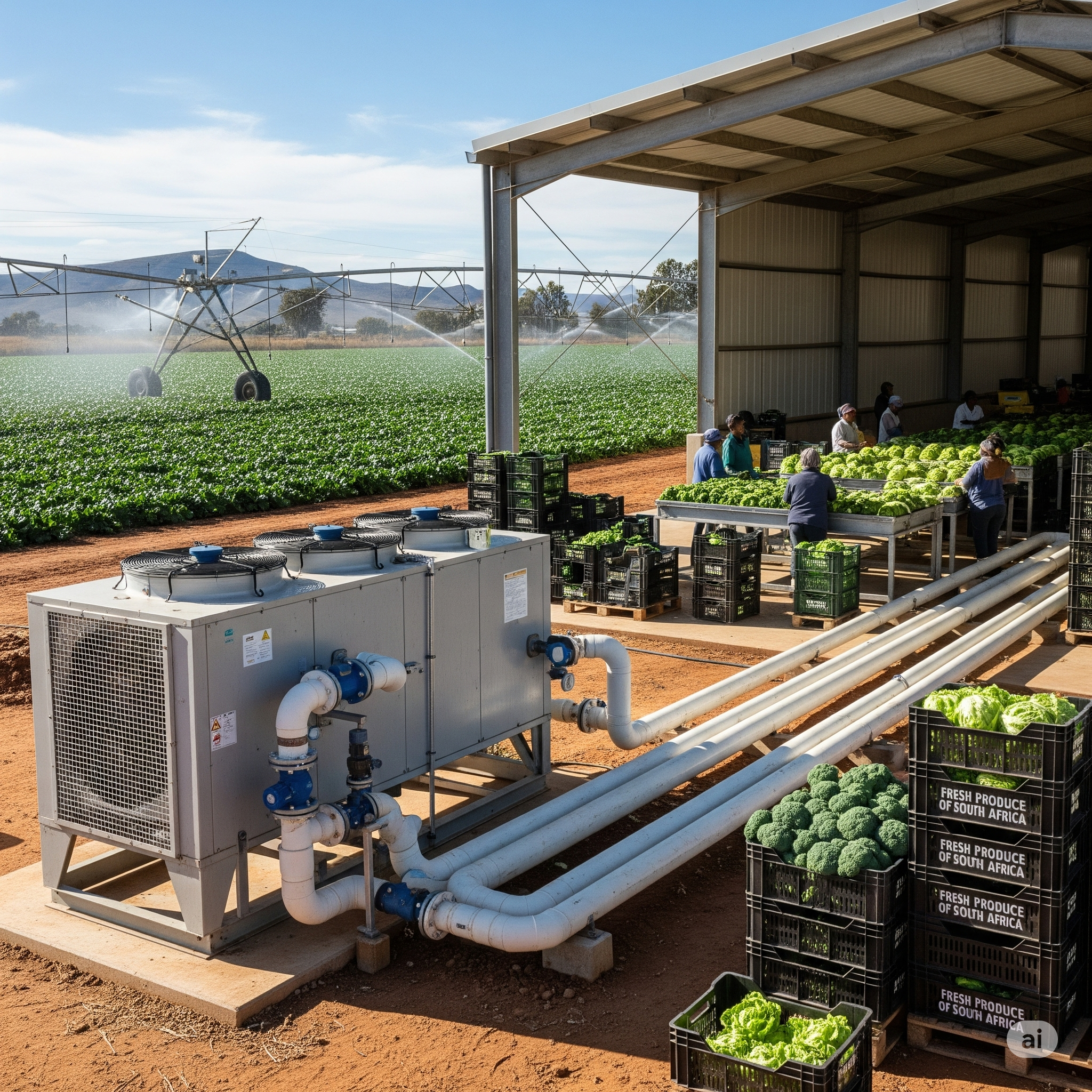
South Africa’s agricultural sector is a cornerstone of its economy, but it faces unique challenges from a hot climate and the demanding standards of both local and international markets. To thrive, farms must adopt advanced technologies that improve product quality, extend shelf life, and enhance operational efficiency. While often associated with manufacturing, industrial chillers in agriculture in South Africa have become a vital tool, providing precise cooling solutions across a range of applications.
This guide explores how industrial chillers are transforming the agricultural landscape, detailing 5 key cooling solutions that are helping SA farms stay competitive.
Table of Contents
- Why Cooling is a Game-Changer for South African Agriculture
- The Ultimate Guide: 5 Cooling Solutions for SA Farms
- Beyond the Chiller: The Importance of a Complete System
- Conclusion
1. Why Cooling is a Game-Changer for South African Agriculture
Heat is a primary enemy of agricultural products and livestock. For crops, a high temperature after harvest can accelerate ripening, spoilage, and the growth of microorganisms. For livestock, heat stress can reduce growth rates, lower milk production, and compromise overall health. Given South Africa’s diverse climate, from the arid Karoo to the subtropical coast, a reliable and consistent cooling system is not a luxury—it’s a necessity for profitability and compliance with stringent food safety regulations.
2. The Ultimate Guide: 5 Cooling Solutions for SA Farms
1. Dairy and Milk Cooling 🥛
For a dairy farm, rapid milk cooling is non-negotiable. Milk leaves the cow’s udder at approximately 35°C, making it an ideal breeding ground for bacteria. Industrial chillers are used to cool the milk immediately after milking, typically to around 4°C, before it is transferred to storage tanks. This rapid temperature drop prevents bacterial growth, preserves the milk’s quality, and ensures it meets the strict standards required for processing.
2. Post-Harvest Produce Cooling 🍎
To maintain the freshness and extend the shelf life of fruits and vegetables, farmers must remove “field heat” as quickly as possible after harvest. Chillers are a central component of this process, supporting:
- Hydro-Cooling: Produce is immersed in or sprayed with chilled water to rapidly lower its temperature.
- Vacuum Cooling: For leafy greens and vegetables, a vacuum is created in a sealed chamber, causing some of the produce’s water to evaporate and cool the product.
This process is critical for South Africa’s export market, as many international standards require specific cold chain temperatures for produce.
3. Poultry and Livestock Cooling 🐄
Heat stress can have a severe impact on the health and productivity of livestock. Industrial chillers are used in several ways to mitigate this:
- Cooling Drinking Water: Providing livestock with chilled drinking water helps reduce their body temperature and encourages them to drink more, which in turn improves feed intake and productivity.
- Barn and Shed Cooling: Chillers can be used to provide chilled water to cooling pads or evaporative cooling systems, which lowers the air temperature in barns and poultry houses, improving animal welfare and growth rates.
4. Winery and Fermentation Control 🍇
South Africa’s world-renowned wine industry relies heavily on precise temperature control. During the fermentation process, yeast converts sugar into alcohol and releases heat. If left unchecked, this heat can kill the yeast and produce off-flavors. Industrial chillers are used to circulate chilled liquid around fermentation tanks, maintaining the optimal temperature range (typically between 10-20°C for white wine and 20-30°C for red wine) to preserve the wine’s delicate aromas, flavors, and overall quality.
5. Grain and Seed Storage 🌾
Storing grains and seeds safely is a challenge, especially in a warm climate where high temperatures can lead to spoilage, mold growth, and pest infestations. Chillers can be used in a closed-loop system to cool silos and storage facilities. This maintains a stable, low temperature that preserves the quality and viability of the grains, protecting the farmer’s investment over long storage periods.
3. Beyond the Chiller: The Importance of a Complete System
A chiller is just one part of a larger cooling ecosystem. For a successful implementation, South African farmers must also consider:
- Insulation: Properly insulated storage rooms and tanks are essential to minimize heat gain and reduce the chiller’s workload.
- Water Treatment: In many parts of South Africa, hard water can lead to scale buildup in water-cooled systems, reducing efficiency. A water treatment plan is crucial for long-term performance.
- Professional Maintenance: Regular maintenance by a qualified technician ensures the chiller operates at peak efficiency, preventing costly breakdowns during a critical harvest or production period.
4. Conclusion
The integration of industrial chillers in agriculture in South Africa is no longer a luxury but a strategic advantage. From preserving milk quality to optimizing wine fermentation and protecting valuable produce, chillers provide the precise cooling power needed to meet the demands of a competitive market. By investing in a customized cooling solution, SA farmers can improve their yields, enhance product quality, and secure their long-term profitability.
At LiquiChiller, we specialize in providing tailored cooling solutions for the South African agricultural sector. Our expert team can help you design, install, and maintain a chiller system that meets the unique needs of your farm, ensuring your operation remains cool, efficient, and profitable.


