

Table of Contents
- Introduction to Load Shedding on Chiller Performance
- How Load Shedding Affects Industrial Chillers
- Key Impacts on South African Industries
- Solutions to Mitigate Load Shedding Effects
- LiquiChiller’s Role in Reliable Cooling
- How to Choose a Resilient Chiller System
- Conclusion: Stay Cool with LiquiChiller
Introduction to Load Shedding on Chiller Performance
Load shedding on chiller performance is a critical concern for South African industries, where frequent power outages disrupt operations. Eskom’s planned power cuts, implemented to manage grid overload, can halt industrial chillers, leading to production losses and equipment strain. In sectors like plastics, food processing, and mining, reliable cooling is essential for efficiency and quality.
LiquiChiller SA, with over 40 years of expertise, offers robust chiller solutions designed to withstand South Africa’s power challenges. This post explores the impact of load shedding on chillers and provides actionable solutions for businesses.
How Load Shedding Affects Industrial Chillers
Load shedding disrupts the consistent power supply needed for industrial chillers, causing:
- Sudden Shutdowns: Power cuts halt chiller operation, leading to temperature spikes in processes like molding or food preservation.
- Power Surges: When power is restored, surges can damage chiller components, such as compressors or control systems.
- Increased Wear: Frequent start-stop cycles strain mechanical parts, reducing chiller lifespan.
- Energy Inefficiency: Backup generators, often used during outages, are less efficient and costly to run.
In 2022, South Africa experienced over 209 days of load shedding, the worst year on record, severely impacting manufacturing and other chiller-dependent industries.
Facing power outages? LiquiChiller’s resilient chillers keep your operations running. Explore our solutions.
Key Impacts on South African Industries
Load shedding on chiller performance affects South Africa’s key industries in distinct ways:
- Plastics Manufacturing: Unstable cooling during injection molding causes defects, increasing waste and costs.
- Food██Food Processing: Power outages disrupt refrigeration, risking spoilage and non-compliance with safety standards.
- Mining: Chillers cooling heavy machinery stop, leading to downtime and reduced output.
- Data Centers: Server overheating from chiller failures threatens data integrity and service reliability.
A study found that load shedding costs South Africa’s economy up to R338 billion over a decade, with manufacturing sectors like plastics and food processing hit hardest due to disrupted cooling.
Solutions to Mitigate Load Shedding Effects
To minimize the impact of load shedding on chiller performance, consider these strategies:
1. Invest in Backup Power Solutions
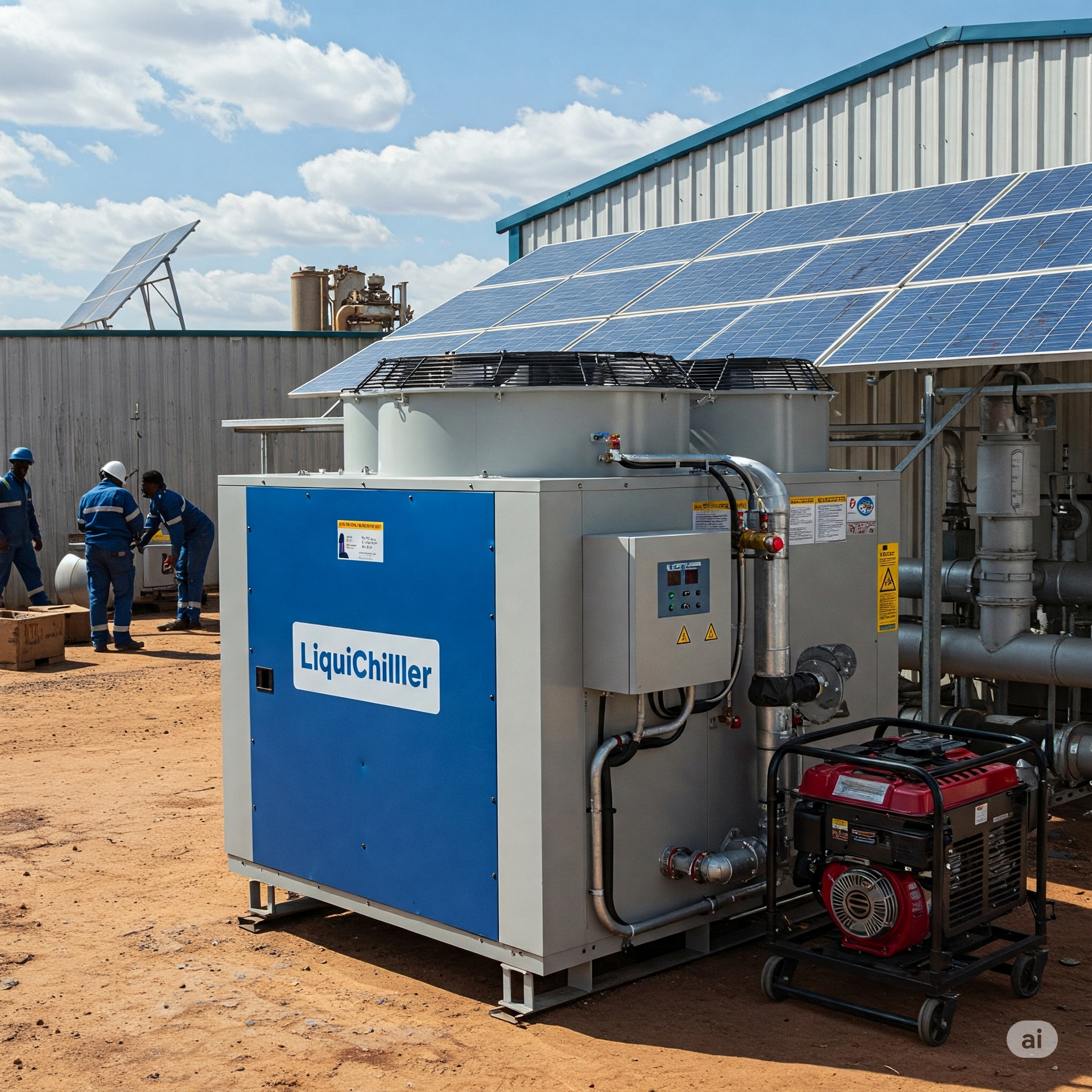
Backup generators or uninterruptible power supply (UPS) systems ensure chillers remain operational during outages. For example, the EcoFlow DELTA 2 Max, with a 2048Wh capacity, can power critical chiller components during short-term cuts.
2. Use Energy-Efficient Chillers
Energy-efficient chillers, like LiquiChiller’s scroll range, reduce power consumption, easing the load on backup systems and lowering costs during outages.
3. Install Surge Protectors
Surge protectors safeguard chiller electronics from power surges when electricity is restored, preventing costly repairs.
4. Schedule Around Load Shedding
Use Eskom’s load shedding schedules to plan chiller-intensive tasks during stable power periods. Flexible scheduling can minimize disruptions in industries like food processing.
5. Explore Renewable Energy
Solar panels or hybrid systems reduce reliance on the grid. South Africa’s 2023 tax rebate offers a 125% deduction for renewable energy investments, making this a cost-effective solution.
For more on backup power solutions, read this guide to chiller resilience (DoFollow).
LiquiChiller’s Role in Reliable Cooling
Since 1982, LiquiChiller SA has been South Africa’s trusted chiller manufacturer, delivering solutions for load shedding challenges. Founded by Peter Artz, our company offers:
- Resilient Designs: Chillers with surge protection and durable components to handle power fluctuations.
- Energy Efficiency: Systems optimized for low power use, ideal for backup generator compatibility.
- Comprehensive Support: 24/7 technical assistance to address outage-related issues.
- Custom Solutions: Tailored chillers for industries facing frequent load shedding.
Whether in Durban or Johannesburg, LiquiChiller ensures your chiller performs despite power cuts. Ready to stay operational? Contact us for a tailored solution.
How to Choose a Resilient Chiller System
Selecting a chiller to withstand load shedding involves:
- Assess Power Needs: Calculate cooling and power requirements to size backup systems.
- Prioritize Surge Protection: Choose chillers with built-in surge safeguards.
- Opt for Efficiency: Select energy-efficient models to reduce backup power costs.
- Consider Hybrid Power: Integrate solar or generator systems for reliability.
- Partner with Experts: LiquiChiller offers free consultations to design outage-proof systems.
Learn more about our custom cooling solutions. For additional insights, refer to this chiller reliability guide (DoFollow).
Conclusion: Stay Cool with LiquiChiller
Load shedding on chiller performance poses significant challenges for South African industries, from production losses to equipment damage. LiquiChiller SA’s resilient, energy-efficient chillers, combined with backup power and renewable energy solutions, empower businesses to maintain cooling during outages. With our expertise, you can minimize disruptions and protect profitability.
Don’t let power cuts cool your operations. Partner with LiquiChiller for reliable chiller solutions in South Africa. Get started today or explore our range of services.


