

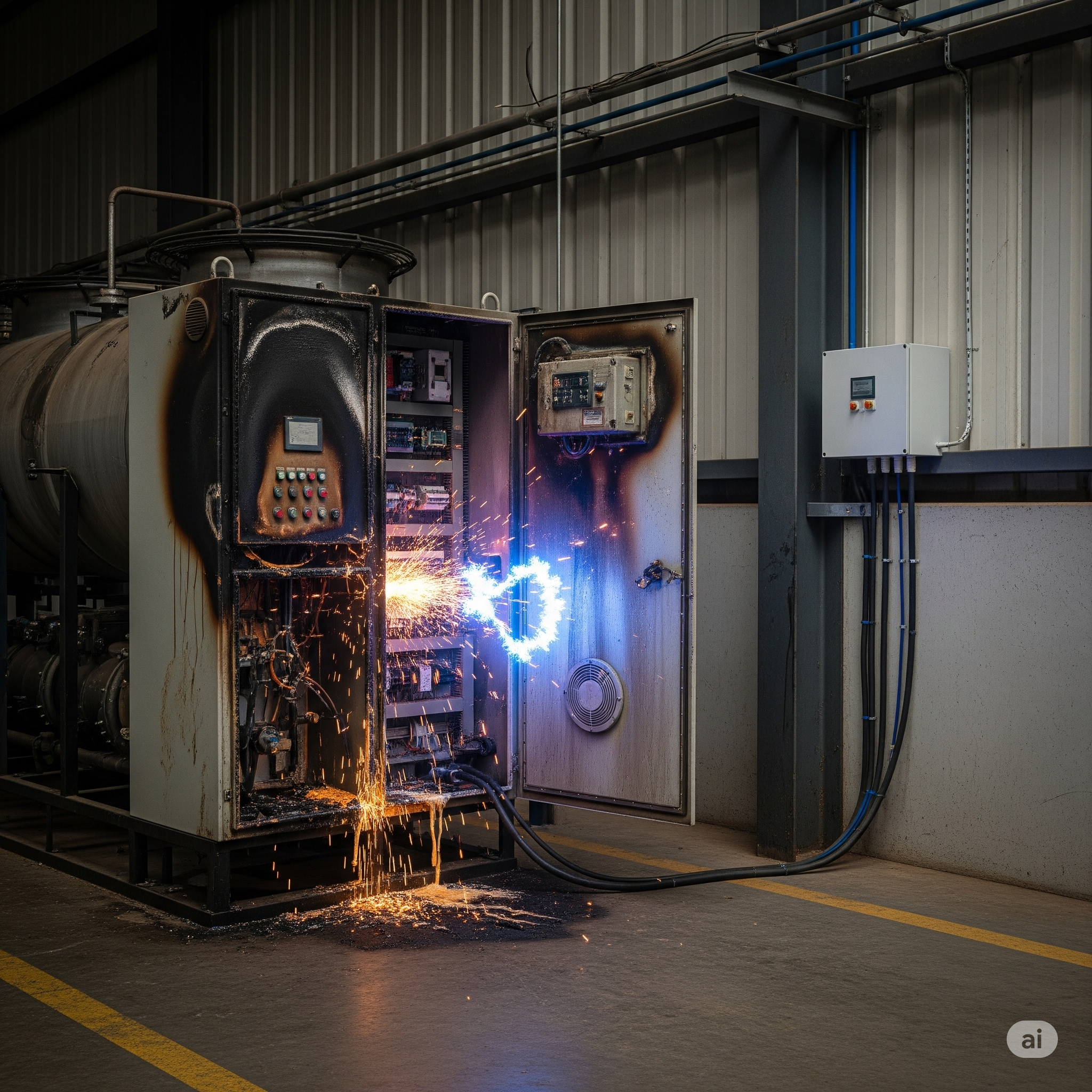
South Africa’s industrial sector operates in a challenging energy environment. Frequent load-shedding and an unstable grid have made power outages and the subsequent voltage spikes a daily reality. For facilities that rely on industrial chillers, this isn’t just an inconvenience; it’s a significant threat. A single power surge in South Africa can cause catastrophic damage to a chiller’s delicate electronic components, leading to expensive repairs, prolonged downtime, and lost production.
This guide outlines 5 critical steps to protecting chillers from power surges in South Africa, providing a clear roadmap for safeguarding your valuable assets and ensuring business continuity in a volatile power landscape.
Table of Contents
- The Threat: Why South Africa’s Power Grid is a Risk to Your Chiller
- The Damage: What a Power Surge Does to a Chiller
- 5 Critical Steps to Protecting Your Chiller
- Conclusion
1. The Threat: Why South Africa’s Power Grid is a Risk to Your Chiller
The most common cause of power surges in South Africa is not lightning, but the return of power after a load-shedding event. When electricity is abruptly restored to a system, all connected appliances and equipment, including powerful industrial chillers, draw a massive inrush of current simultaneously. This sudden, unstable rush of electricity can create voltage spikes far exceeding the nominal 230V, lasting for a microsecond but powerful enough to cause severe damage.
Over time, these repeated, smaller surges can also cause “electronic rust,” slowly degrading a chiller’s internal components and reducing its lifespan, often without any immediate visible signs of damage.
2. The Damage: What a Power Surge Does to a Chiller
An unprotected chiller is highly vulnerable to power surges. The components most at risk include:
- Microprocessor Control Boards: The “brain” of the chiller, these sophisticated control systems can be instantly fried by a voltage spike, rendering the entire unit inoperable.
- Compressors and Motors: The inrush current and voltage instability can stress and burn out compressor windings and motor insulation, leading to total motor failure.
- Variable Speed Drives (VSDs): The electronic components in VSDs, which are crucial for energy efficiency, are extremely sensitive to voltage fluctuations and are often the first to fail.
- Sensors and Transducers: These critical devices that monitor pressure and temperature can be damaged, leading to false readings and poor chiller performance.
3. 5 Critical Steps to Protecting Your Chiller
1. Install High-Quality Surge Protection Devices (SPDs)
A robust power surge in South Africa protection strategy begins with the installation of SPDs at the main electrical distribution board. These devices, which must comply with SANS 61643-11 standards, act as the first line of defense by diverting excess voltage to the ground before it can reach your equipment. For comprehensive protection, consider a multi-stage approach with Type 1 or Type 2 SPDs at the main board and a Type 3 device at the chiller’s point of use.
2. Ensure Proper Grounding and Earthing
An effective grounding system is the foundation of all electrical safety. A proper earth connection provides a safe path for fault currents and excess voltage to dissipate into the ground. Without it, even the best surge protectors cannot function correctly. Regular inspection and maintenance of your earthing system by a qualified electrician are non-negotiable.
3. Implement a Phased Power-Up Protocol
After a power outage, the rush to restore cooling can be tempting, but it is dangerous. The simultaneous restart of large equipment creates a massive inrush current that can overwhelm the system. The best practice is to implement a staggered, or phased, power-up protocol. This involves delaying the start of your chiller for a short, pre-determined period after power is restored, allowing the grid to stabilize and other smaller loads to draw power first.
4. Use Voltage Stabilizers and UPS Systems
While SPDs protect against surges, they don’t solve the problem of under- and over-voltage. In South Africa, where grid voltage can fluctuate, voltage stabilizers are an excellent investment. For critical processes, an Uninterruptible Power Supply (UPS) provides a clean, continuous power supply, effectively isolating the chiller from all grid instability and ensuring continuous operation.
5. Partner with a Professional for Regular Audits
The final step is to partner with a professional chiller service provider. A qualified technician can perform a comprehensive electrical audit of your system, ensuring that all protective devices are correctly installed and functioning. They can also check for signs of wear and tear caused by repeated surges and recommend proactive replacements before a failure occurs.
Conclusion
In South Africa’s volatile energy climate, proactive emergency preparedness is the most effective way to safeguard your industrial chillers. By implementing a multi-layered protection strategy, from high-quality surge protection devices to a phased power-up protocol, you can dramatically reduce the risk of damage and ensure your cooling systems remain reliable.
At LiquiChiller, we understand the unique challenges of the South African power grid. Our chillers are built with robust electrical protection, and our team of expert technicians provides the professional installation and maintenance services required to keep your systems safe and operational.


